

Fortress Fencing Team · September 10, 2026 · 6 min read
Four Ways to Turn an Open Chain Link Fence Into a Private One
Slats, wind-permeable screens, natural rolls, hedging, or a full swap to vinyl: here is what actually holds up in Surrey’s rain and wind.
Our chain link fencing is the workhorse of Surrey and Fraser Valley fencing: affordable, tough, and built to outlast most trends around it. The one thing it was never designed for is privacy. If you’re tired of the neighbours, or the street, having a clear view through your yard, you don’t necessarily need to tear the fence out. There are several ways to dress up an existing chain link fence, each with its own look, cost tier, and lifespan, plus a few situations where replacing it outright with vinyl is the smarter call. Here’s how the real options compare, and what our wet winters, summer UV, and Fraser Valley wind do to each one over time.
Privacy Slats: The Classic Upgrade
Slats come in two weave styles. Vertical weave threads individually through each diamond, taking longer to install but locking in place for roughly 85 to 95 percent coverage. Horizontal weave slides through in continuous rows, goes in faster, and typically lands closer to 65 to 75 percent coverage.
Material matters just as much. PVC slats are the budget option, light and easy to install, but our long summer sun fades and can eventually embrittle cheaper PVC, especially on south and west-facing runs. Aluminum slats cost more but hold their colour longer and resist wind and impact damage better, which suits an exposed driveway or side-yard run. Either style adds real wind load, so confirm your posts and line are solid before slatting the whole fence.
Windscreen Mesh: Wind-Permeable Privacy
Privacy screen mesh is the knitted or woven fabric you’ll recognize from tennis courts, zip-tied directly onto the chain link. Knitted mesh (usually UV-stabilized HDPE) is the more durable residential choice, since it won’t unravel at a cut edge the way woven mesh can. Most knitted screens block 70 to 90 percent of visibility depending on density, while still letting air pass through.
That air permeability is the whole point, and it’s why good mesh, properly installed with reinforced hems and grommets, typically holds up 7 to 10 years outdoors before UV wear shows.
Mesh is wind-permeable rather than solid for a structural reason. A solid tarp across chain link acts like a sail in a storm and can tear loose or pull posts out of the ground. Mesh lets wind bleed through instead, which matters on open Fraser Valley properties that catch fall and winter windstorms. Fasten it every 12 to 18 inches, not just at the corners.
Bamboo & Reed Rolls: A Natural Look
Woven bamboo or reed rolls give chain link a garden-fence look instead of an industrial one, and they’re usually one of the more affordable options, zip-tied or wired on in sections.
The trade-off is durability in a coastal, rainy climate. Natural material isn’t built for Metro Vancouver’s wet season year after year. Expect greying and some fading within a year or two, and in shadier, damper spots, mould and premature rot can shorten usable life to roughly 3 to 5 years before sections need replacing. It’s a good-looking, low-cost option for a patio or garden screen, but plan on periodic replacement rather than a set-and-forget fix.
Hedging: Living Privacy Along the Fence Line
Planting a hedge outside an existing chain link fence is the slowest option and, for a lot of Surrey properties, the best-looking one long term. Cedar (emerald cedar and western red cedar both thrive here) suits our mild, wet climate well, giving dense, year-round green privacy no slat or screen can match.
The catch is patience and upkeep: a newly planted hedge typically needs three to five growing seasons to form a solid screen, plus regular watering while it establishes and ongoing trimming after. A hedge also isn’t a security barrier on its own, which is why pairing it with the chain link fence already in place works well: the fence handles structure and security while the hedge softens the look. One note before you plant or build higher: Surrey and most Metro Vancouver municipalities cap standard backyard fence height around 6 feet without a variance, and a tall hedge at the property line can run into the same rules, so check with the city first.
When It Makes More Sense to Just Replace the Fence
Dressing up an existing fence makes sense when it’s structurally sound, good posts, no major rust or sagging, and you just want more privacy without a renovation. But if the chain link is old, rusted, or leaning, or you’ll be re-slatting or re-screening every several years anyway, the ongoing cost starts to work against you compared with installing a vinyl privacy fence once.
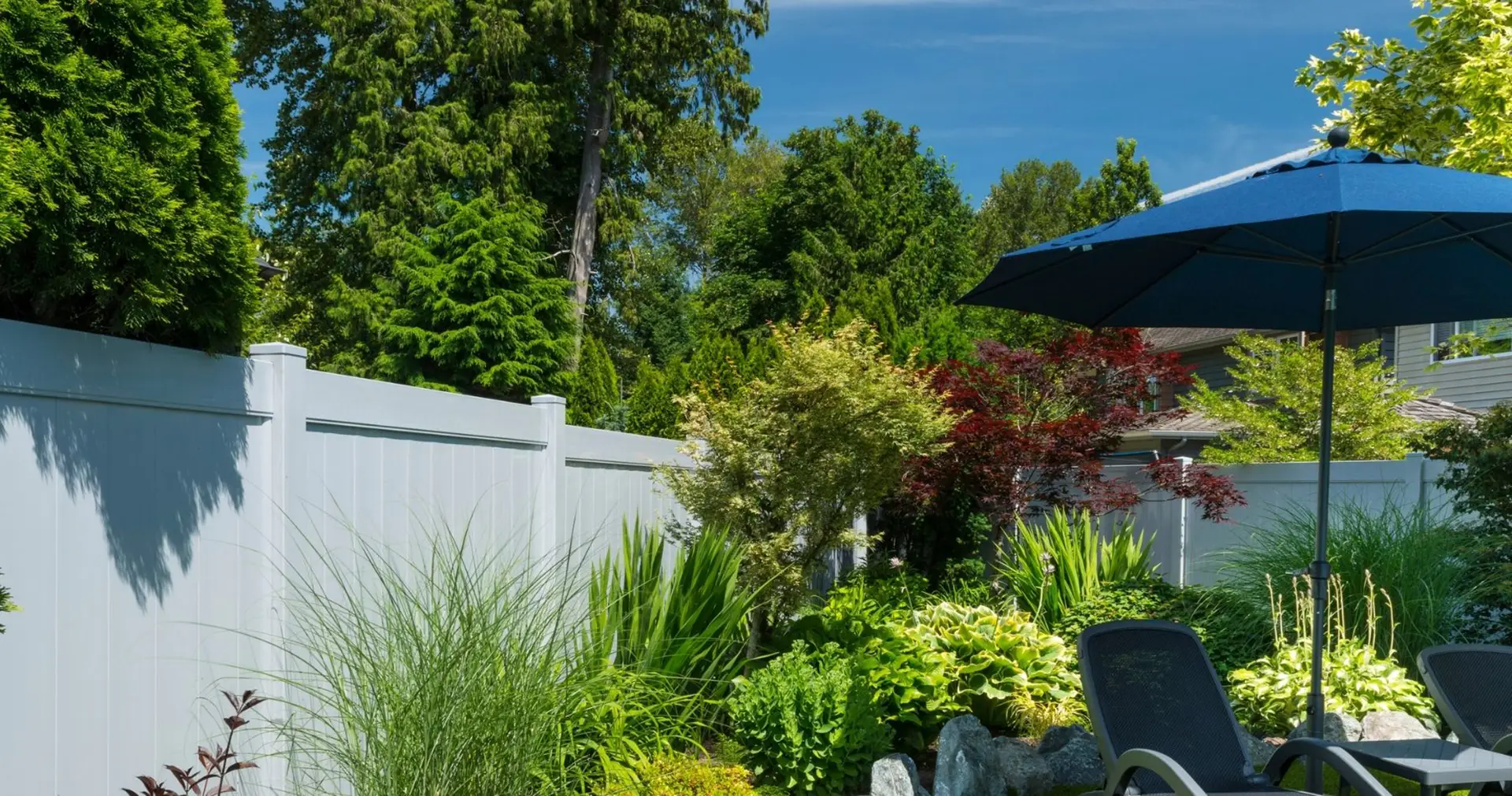
Vinyl gives full, permanent opacity with no slats to feed through and no screen fabric to replace after a decade of sun. It won’t rust, doesn’t need painting, and comes in a range of colours and panel styles that read as a finished feature rather than a retrofit. The trade-off is upfront cost, but for a full backyard perimeter where the goal is permanent, low-maintenance privacy, it often beats repeatedly refreshing add-ons on an aging fence.
For most Surrey homeowners with a chain link fence that’s still structurally solid, aluminum slats or a good knitted windscreen mesh hit the best balance of cost, durability, and weather resistance. Save full vinyl replacement for fences already due an upgrade, or yards where permanent, maintenance-free privacy is the real goal.
Common Questions About Chain Link Privacy
Can privacy slats be added to any existing chain link fence?
Yes, in almost every case. Slats thread into standard chain link mesh, so as long as the posts are solid and the mesh isn’t badly corroded, slats or windscreen mesh go on without rebuilding anything.
Will windscreen mesh blow out in a storm?
Good knitted mesh, properly fastened, is built to handle wind, not fight it. The open weave lets air pass through instead of loading up like a sail. The real risk is loose or widely spaced zip ties, so secure it every 12 to 18 inches.
How long does bamboo or reed screening last here?
Typically 3 to 5 years, sometimes less in shaded or damp spots. Our rainy season is hard on natural woven material, so budget for periodic replacement rather than treating it as permanent.
Is it cheaper to add slats or just replace the fence with vinyl?
Adding slats or screen to an existing fence is almost always cheaper upfront. Full vinyl replacement costs more to install but removes ongoing replacement costs down the road. The right call depends on your current fence’s condition and whether you want a quick upgrade or a permanent one.
Do I need a permit to add privacy screening in Surrey?
Generally no, since you aren’t changing the fence’s height or structure. Permits and setback rules tend to come into play only if you’re raising fence height, building new, or planting a hedge that will grow past the standard height limit, so check with the City of Surrey if your plans involve any of that.
Want Real Privacy on Your Fence?
Fortress Fencing installs and repairs chain link, ornamental, and vinyl fencing across Surrey and the Fraser Valley. Tell us what you’re working with and we’ll walk you through the option that fits your yard, your budget, and our weather.