

Fortress Fencing Team · November 14, 2026 · 6 min read
Who pays for a fence on the property line in BC?
If the fence sits entirely on your land, it is yours and so is the bill. If it sits on the line and you and your neighbour have agreed to it, you are generally partners in it and usually split the cost. If you cannot agree, the safest move is to build on your own side. Here is how to work out which case you are in, and how to settle it before it turns into a dispute.
A fence blown down in a winter storm, or a boundary fence that has reached the end of its life, is the moment many homeowners in Surrey and Metro Vancouver start asking the same questions: where exactly does the fence go, who has to pay, and what if the neighbour says no? Getting those answers straight before you call an installer saves money and keeps the peace.
Know where your property line really is
Fences are often built close to where people think the line is, not on the line itself. In BC, it is the property owner’s job to locate the line accurately, and a fence built on someone else’s land can end up in front of a judge.
- Look for your survey plan. A land survey shows the iron pins, called survey monuments, that mark your property corners. The BC Land Title office may hold one for your lot.
- Hire a registered BC land surveyor if you are not sure. If you and your neighbour disagree about where the line is, a survey settles the question.
- Leave the pins alone. Moving or removing a survey monument while you build is a criminal offence.
Who pays: it depends where the fence sits
BC legal information sources such as People’s Law School explain it in three simple cases. The cost question follows the location of the fence.
| Where the fence sits | Who owns it | Who usually pays |
|---|---|---|
| Entirely on your side of the line | You | You. You do not need your neighbour’s agreement to build it. |
| Right on the property line, agreed with your neighbour | Both of you, as partners in the fence | Generally each owner pays half of building and repairing it, with some exceptions. Agree this first. |
| On your neighbour’s land | Your neighbour | Your neighbour. A fence that crosses onto their land can be ordered removed. |
A fence you build entirely on your own land is your decision and your cost. A fence on the line is a shared project, so agree first and write it down.
Who pays for a fence? It depends where it sits
This is a guide to the three cases, not statistics. It follows the table above.
General information, not legal advice. Talk to a lawyer about a specific dispute. Source: People’s Law School, Fences and Neighbours.
Height, permits and city rules
Your city, not the province, decides how high a fence can be and what it can be made of. Heights depend on your zone and where the fence sits on the lot. As a rough guide, front yard fences are often limited to about four feet and side and back fences to about six feet. Richmond, for example, allows up to 2.0 m in residential zones and 1.2 m in the front yard or exterior side yard. Corner lots also have sightline limits at intersections.
Maximum residential fence height in Richmond, BC
Fence height limits depend on where the fence sits on your lot.
One example only: other cities set their own limits and Richmond’s bylaw also restricts some fence materials. Confirm your city’s current bylaw before you build. Source: City of Richmond, Residential Regulations.
In Surrey, fence rules sit in the Zoning Bylaw. The City says on its building permit page that a building permit is not required for a fence, that the fence must be on your property, and that fences cannot be on City property or on a City right-of-way or easement. It also says that if you and your neighbour decide to share a fence, the City has no jurisdiction in disputes about it.
Fences around pools or on top of retaining walls often need a permit, and strata corporations can set their own fence rules. Our guide to fence permits and height limits in Vancouver is a useful starting point, and your city’s bylaw has the final word.
Settle it before it becomes a dispute
|
1
|
Talk to your neighbour first Explain why you want the fence, where it will go, what it will look like and roughly when. People appreciate being consulted even when the fence is on your own land. If you want it right on the line, their agreement is not optional. |
|
2
|
Confirm the line Pull out your survey plan, or hire a surveyor. A survey costs less than an argument and gives you both the same answer to point at. |
|
3
|
Agree the details in writing Write down the location, height, style, colour, who pays what share and who looks after repairs. A short note signed by both owners, with a copy for each of you, is far better than a handshake. |
|
4
|
Get a written quote and share it Ask an installer for a written estimate based on the agreed line and share it with your neighbour so the cost split is based on the same numbers. |
|
5
|
Build on the agreed line and keep records Take photos before and after, and keep the receipts. If anyone asks later who agreed to what, you have the answer. |
When your neighbour says no
Sometimes the neighbour says no, or never replies. You still have options, and none of them requires a fight.
- Build on your own side. The fence is then yours, and so is the cost. You give up a strip of your own lot, but you avoid the argument.
- Check for strata or association rules. If you live in a strata, the strata council may decide the fence style and who maintains it.
- Get legal advice for a real dispute. If a fence already crosses the line, either neighbour can ask the BC Supreme Court to sort it out, and the City of Surrey will not referee. A lawyer or mediation service can tell you where you stand.
Choosing a fence for a shared boundary
A boundary fence is something two households look at every day, so the material matters. Low-maintenance vinyl fencing avoids arguments about painting and upkeep, chain link keeps sightlines open, and ornamental aluminum gives a cleaner look for the front of a property. If you are replacing a fence in Surrey, our fence installers in Surrey can quote it on the line your survey shows.
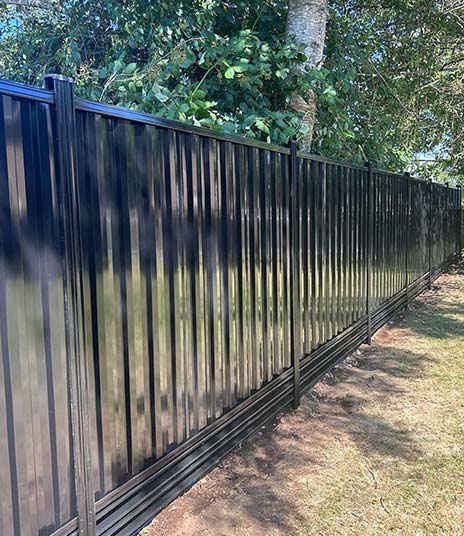
“Leo & crew did an amazing job for our property. I knew it would look good, but I didn’t expect it to look sooo good. … It went really smooth, they are very professional, reliable and trustworthy customer service. It looks great and it’s very easy to keep it clean.”
Dana Ghica · Google review, Aug 2025
Frequently Asked Questions
Can I build a fence right on the property line without asking my neighbour?
No. You can build anywhere on your own side of the line without anyone’s agreement, but a fence placed right along the property line needs your neighbour’s consent. Talk first and agree the details in writing.
Who pays for a fence between two properties in BC?
It depends where the fence sits. A fence built entirely on one owner’s land belongs to that owner, and so does the bill. A fence on the line that both owners have agreed to is generally shared, and the cost is usually split equally, with some exceptions. Agree the split before any work starts.
Do I need a permit to build a fence in Surrey?
The City of Surrey says a building permit is not required for a fence, and that the fence must be located on your property. Other cities differ, and fences around pools or on top of retaining walls often need a permit, so check with your city first.
Will the City step in if my neighbour and I disagree about a shared fence?
In Surrey, no. The City says it has no jurisdiction in disputes that arise over fences that neighbours share. That is why a written agreement before you build matters so much.
How do I find my property line?
Start with a survey plan for your lot, which shows the iron pins that mark the corners. If you do not have one, a registered BC land surveyor can find and mark the line. Never move a survey pin while you work.
How high can a residential fence be?
It depends on your city and zone. As a general guide, front yard fences are often limited to about four feet and side and back fences to about six feet. Richmond, for example, allows up to 2.0 m in residential zones and 1.2 m in the front yard or exterior side yard. Check your city’s bylaw before you order.
Related Services
Replacing a Shared Fence?
Winter is a good time to plan. Once you and your neighbour have agreed on the line, we can quote the job in writing. Serving Surrey and Metro Vancouver.