

Fortress Fencing Team · September 10, 2026 · 6 min read
How to Pick a Vinyl Fence Colour You Will Still Like in Ten Years
A practical, Metro Vancouver-specific look at vinyl fence colour options, from classic white to modern black, and how to pick the shade that suits your house and our climate.
The standard vinyl fence colour palette
Most vinyl fencing manufacturers build their colour range around six core options, and understanding what each one is actually made of will save you from a costly reorder down the line. White is the industry default, moulded from the same base resin as the vinyl profile itself, which makes it the most affordable and widest-stocked colour. Almond (sometimes called tan) is a warm, creamy off-white that pairs well with beige or stucco homes and hides dust and pollen better than pure white. Clay sits between almond and grey, a soft neutral brown that works with brick and earth-toned siding.
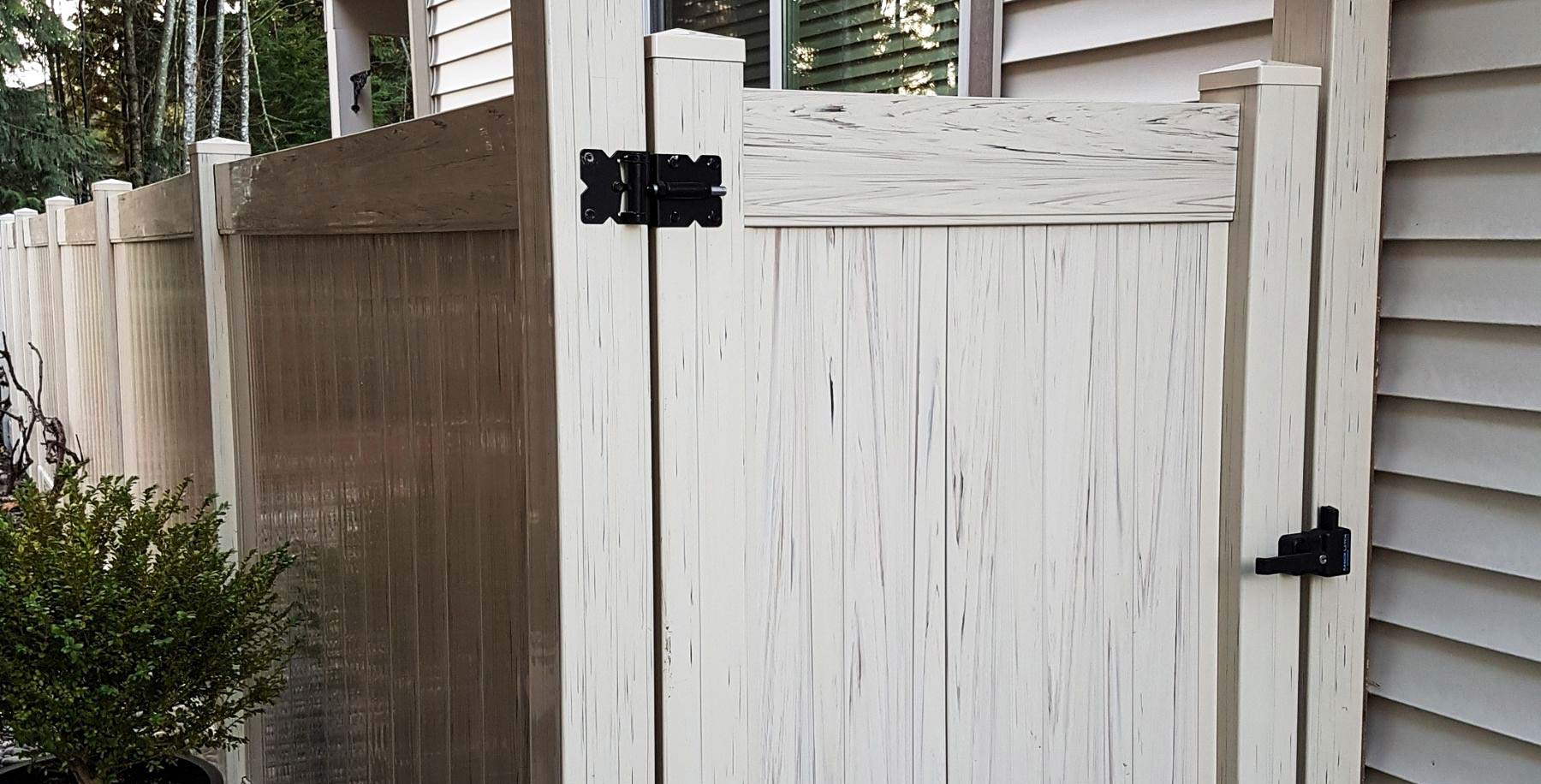
Grey has grown from a niche option into one of the most requested colours on the market, ranging from a light “stone” grey to a deep charcoal. Black is the newest mainstream addition and typically costs more, because manufacturers use a different, more heat-stable capstock formulation to keep dark colour from warping in direct sun. Finally, wood-grain laminate finishes, most commonly a cedar or walnut look, apply a textured, embossed vinyl skin over a white or tan core so the fence reads as real wood from a normal viewing distance without the upkeep.
A quick note on how colour is actually applied: true colour-through vinyl has pigment mixed into the resin all the way through the panel, so a scratch does not show white underneath. Cap-stock or laminate colours are a coloured layer bonded to a white or grey core. Cap-stock is how most dark colours and all wood-grain finishes are produced, and quality varies noticeably between manufacturers, so ask your fence company which method a given product uses before you commit.
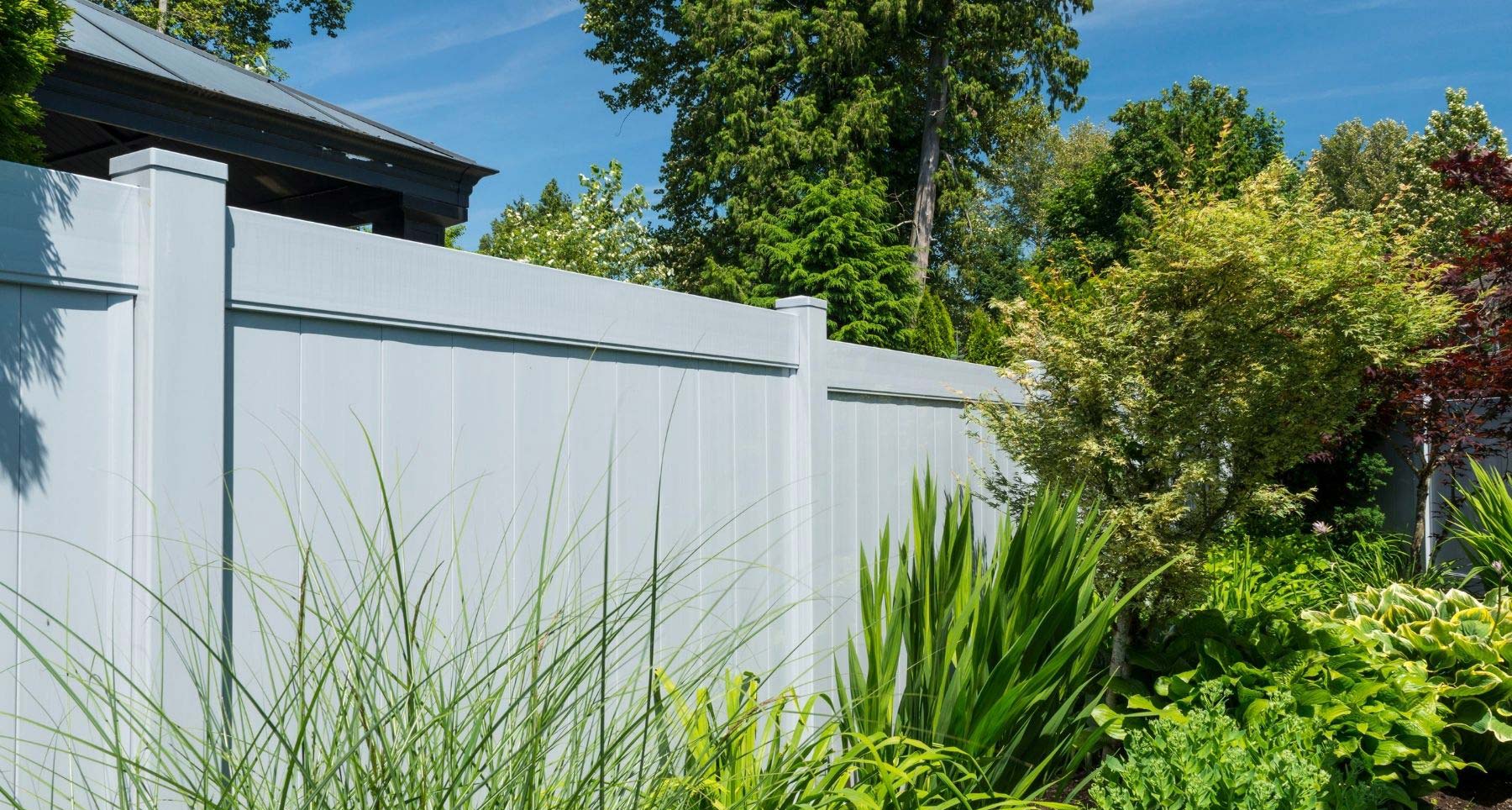
Black and dark grey vinyl absorb noticeably more solar heat than white or almond, sometimes 30 to 50 degrees hotter on the surface during a sunny afternoon. Older vinyl formulations could soften, warp or discolour under that heat load. Modern dark vinyl uses UV-stabilized resins and heat-reflective additives specifically to manage this, but the panel still runs hotter to the touch, which matters if the fence sits right beside a hot tub, deck or south-facing wall.
Matching your fence colour to your home’s exterior
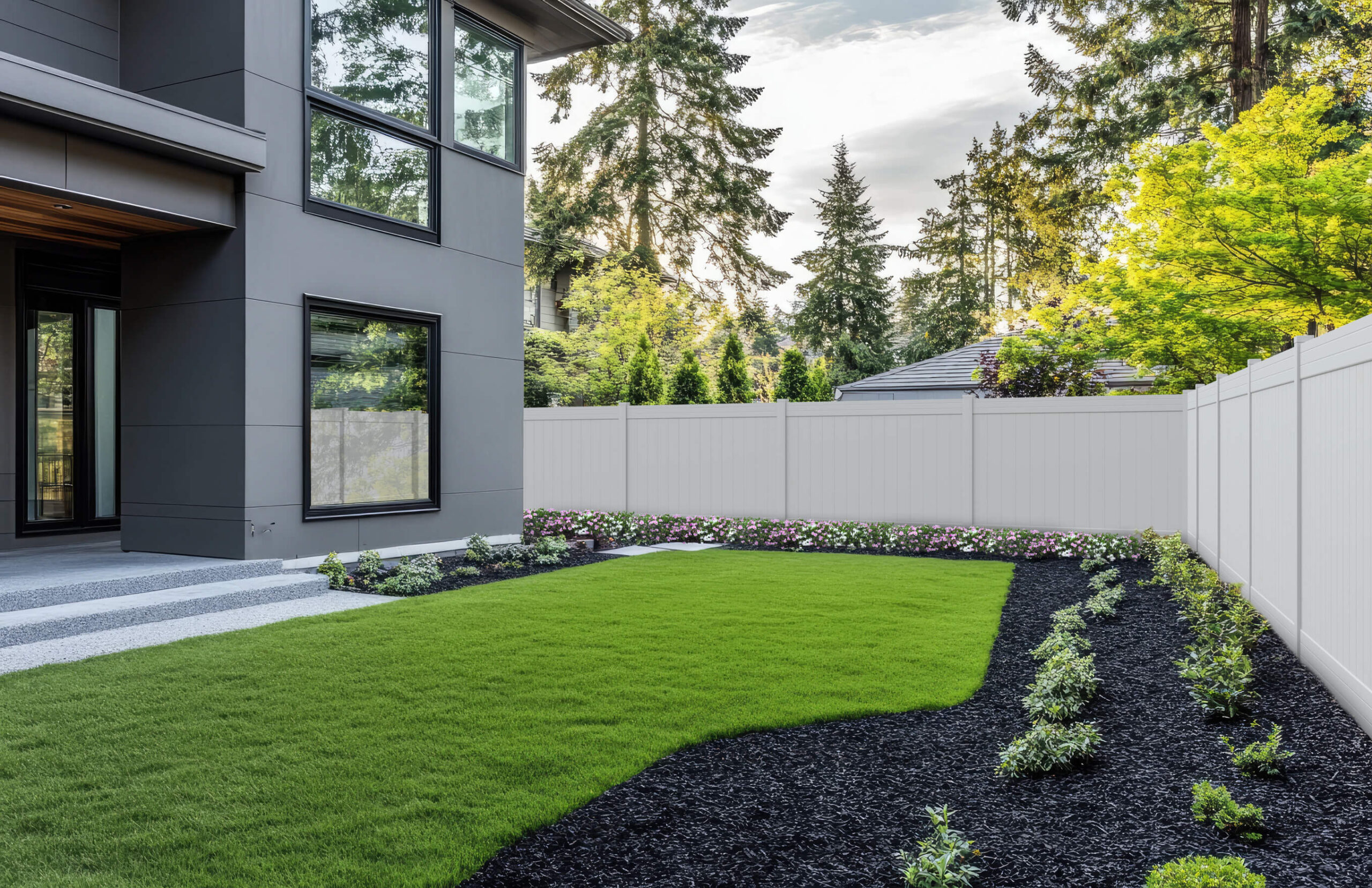
The fastest way to narrow six colours down to one is to treat your fence like a large piece of trim, not a standalone feature. Start with your siding or stucco colour. Warm-toned exteriors, beige, tan, terracotta brick or warm grey, generally pair best with almond or clay vinyl, since a stark white fence can read as too cool and clinical against them. Cool-toned exteriors, blue-grey siding, white stucco or board-and-batten in charcoal, tend to look sharper with white, light grey or black.
Trim and window colour matter as much as the main siding colour. If your window frames, garage door or fascia are black or dark bronze, a black or dark grey vinyl fence will echo that detail and tie the whole exterior together. If your trim is crisp white, matching white vinyl keeps the property looking cohesive rather than introducing a second, competing white tone.
Roofline colour is the piece homeowners forget most often. A dark charcoal or black asphalt roof reads well with a black or dark grey fence, especially along the front yard where roof and fence are visible in the same sightline. A lighter roof, especially on a bungalow or ranch-style home common across Surrey and Cloverdale, tends to look better balanced with almond, clay or a lighter wood-grain finish.
Walk your property line at midday and note which colour actually appears on your siding, trim and roof, paint colour names are often misleading. Bring a physical vinyl sample outside and hold it against the house before ordering. Colour under showroom lighting and colour on your own street in real Pacific Northwest daylight are rarely the same.
Heat, UV and Metro Vancouver weather considerations
Vinyl fencing performs differently depending on climate, and Surrey and the wider Fraser Valley sit in a fairly forgiving zone compared with hotter interior regions. Summer highs here are moderate, so heat-driven warping is a lower risk than it would be in, say, the Okanagan or Fraser Canyon. That said, south and west-facing fence runs still catch strong, direct summer sun, and a dark-coloured panel in that exposure will run considerably hotter than a white or almond one nearby.
UV exposure, not just heat, is the bigger long-term factor for colour retention on this coast. Even on cloudy days, UV rays reach the surface of the vinyl and slowly break down pigment and surface gloss over years, which is what causes fading and chalking on lower-quality vinyl. Look for panels rated with titanium dioxide-stabilized resin, this is the additive that resists UV breakdown, and ask your supplier for the manufacturer’s warranty on colour fade specifically, not just on structural cracking.
The wet, mild Pacific Northwest winter is actually vinyl fencing’s strongest selling point over wood. Vinyl does not absorb moisture, so it will not rot, swell, warp or grow mould the way a wood fence can after a typical Surrey winter of near-constant rain. Colour retention is not affected by moisture the way it is by UV, so a well-made vinyl fence in any colour should look essentially the same after five wet winters as it did on day one, provided the UV-stable resin was used in the first place.
Current colour trends in vinyl fencing
Black and dark grey vinyl fencing has become the standout trend of the past few years, especially for front-yard privacy fences, pool enclosures and ornamental-style picket sections. It reads as modern and architectural, pairs naturally with black metal handrails and gates, and tends to make landscaping, especially greenery, stand out more sharply against it than a white background does.
White and almond remain the classic, best-selling choices, particularly for backyard privacy fencing and traditional picket styles, and they carry the lowest surface heat and the widest availability across manufacturers. For homeowners who want the look of a natural wood fence without the annual staining, sealing and rot risk, wood-grain laminate finishes in cedar and walnut tones have grown quickly as a middle-ground option, delivering genuine wood texture and colour variation with vinyl’s maintenance-free performance.
We are also seeing more mixed-material requests, a black or dark grey vinyl privacy section paired with black aluminum or steel handrails and gates, which gives a clean, unified look across an entire property line rather than a single fence style used everywhere.
How to choose the right shade for your property
Work through these questions in order, and the right colour usually becomes obvious by the end.
What is the fence’s main job? A privacy fence at the back of the yard can afford to be a bolder colour since it is rarely seen from the street. A front-yard or corner-lot fence facing full sun for most of the day is a better candidate for a lighter shade if heat and long-term colour stability are a concern.
What does the rest of your exterior already commit you to? Match warm siding with almond or clay, cool or monochrome siding with white, grey or black, and let existing trim and roof colour break any tie.
How much sun exposure does that specific fence line get? South and west runs in full summer sun favour white, almond or light grey. Shaded or north-facing runs can carry black or dark grey without the same heat concern.
Do you want a natural-wood look without wood maintenance? A cedar or walnut wood-grain laminate finish gets you there, though it typically costs more than a solid colour panel.
Once you have answered those, the best next step is to see actual samples against your own house in daylight, colours can shift noticeably between a catalogue photo, a showroom sample and your specific siding. Our team can bring sample panels to your property as part of a free quote.
Frequently Asked Questions
Does a black vinyl fence really get warped by the sun?
Older or low-grade black vinyl could warp, but modern black vinyl from a reputable manufacturer is built to resist it. Manufacturers now use heat-stable resin formulations and UV-resistant additives specifically for dark colours, so warping is uncommon with quality product. The main practical effect of a dark colour is that the surface simply runs hotter to the touch on a sunny day, not that it will fail structurally.
What is the most popular vinyl fence colour right now?
White and almond remain the top overall sellers, but black and dark grey are the fastest-growing choice for a modern look. White and almond are chosen most often for classic backyard privacy and picket fencing, while black and charcoal grey have become the go-to for homeowners wanting a contemporary, architectural exterior, especially paired with black gates or handrails.
Will my vinyl fence colour fade over time in the Surrey climate?
Quality vinyl with UV-stabilized resin holds its colour well here, though some gradual fading is normal after many years in any colour. UV exposure, not rain or humidity, is what slowly affects vinyl pigment over time, and it happens even on overcast days. Our wet Metro Vancouver winters do not damage colour the way they would wood stain, so a well-made panel should look close to new for years with just occasional washing.
Should my fence match my house colour exactly, or contrast with it?
It should coordinate with your siding, trim and roof rather than match one of them exactly. A fence that repeats your trim colour (often black or white) while relating to your siding tone usually looks the most intentional. An exact match to the siding itself can sometimes flatten the exterior and make the fence disappear rather than complement the house.
Can I mix vinyl fence colours with metal gates or handrails on the same property?
Yes, and it is increasingly common to pair black or dark grey vinyl fencing with black metal gates and handrails for a unified look. Since Fortress Fencing builds both vinyl fencing and ornamental metal work, we can colour-match a vinyl privacy run to powder-coated gates, handrails or bollards on the same property so the whole perimeter reads as one design rather than several unrelated projects.
Ready to Choose Your Colour?
Fortress Fencing will bring real vinyl colour samples to your Surrey or Fraser Valley property, walk the fence line with you and quote the job on the spot.